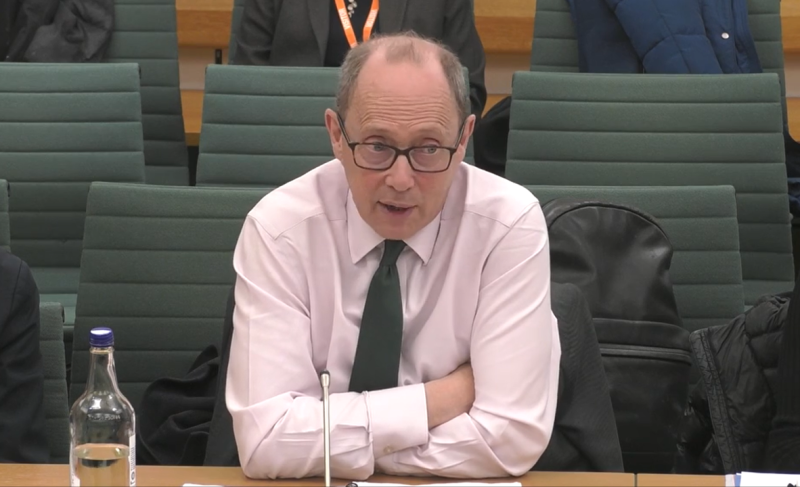
More than a decade after the Dilnot Commission reported, his core argument has not changed. The problem, he says, is not a lack of reports or a lack of policy options. It is that governments have repeatedly failed to act on what is already widely understood.
For Dilnot, the broad outline of reform remains clear: fund the means-tested system properly and introduce a cap so that no one is left facing unlimited care costs alone.
Why should social care funding be a national responsibility?
Dilnot is sympathetic to the growing view that adult social care should be funded far more explicitly at a national level rather than relying so heavily on local authorities. But he is careful to distinguish cause from consequence. The “central problem,” he argues, is not simply organisational fragmentation but “the level of funding.”
That matters because local authorities are being asked to carry a burden they were never really designed to bear. Social care, in Dilnot’s words, is “a national issue”, and the sums needed to create a fair and sustainable system cannot realistically be raised through local taxation alone. The mismatch between need and the local tax base is simply too great, especially in poorer parts of the country. Even if health and social care were more neatly integrated, he suggests, many of today’s core pressures would remain unless the funding base itself changed.
“If we were starting from scratch,” he says, “I’m sure it would be a national system.” It is a view that goes to the heart of his wider frustration at how Britain has spent years debating structures and responsibilities while avoiding the more basic question of who should actually carry the risk.
What is the case for pooling catastrophic risk?
That question leads directly to the principle most closely associated with Dilnot’s name: the cap on care costs. But he is keen to stress that the cap was never meant to stand alone.
Too often, he argues, debate around his commission’s work focused on the cap while paying less attention to the equally important need to fund the means-tested system properly. “One was funding the means-tested system properly. That’s an absolute prerequisite,” he says. “If the means-tested system isn’t funded properly … we’ll have a very unfair system.”
The cap mattered for a different reason. Social care, he argues, is fundamentally an insurance problem. Most people will eventually need some form of care, but nobody knows in advance how much. It could be a short period of support near the end of life, or it could mean many years in residential care. “It’s unknowable,” he says.
In most other areas of life, that sort of uncertainty is dealt with through risk pooling. Yet Dilnot is clear that the private market cannot solve this on its own. Insurers can spread risks that are reasonably predictable over time; they struggle when asked to price liabilities that may not materialise for decades. “The private sector can’t provide it,” he says. “The only entity that can properly insure this is the state.”
That is not because he opposes private finance. On the contrary, Dilnot is clear that private sector products could have a role but only once the state has stepped in first. Social care, he argues, is not like ordinary insurance, because people would need to pay for protection decades before they might ever need to claim.
“The private sector can’t do it,” he says. “Nowhere in the world is there a proper private insurance market for this. It can’t be done. The only entity that can properly insure this is the state.” But once government has taken on “what only it can do”, namely the catastrophic risk, he sees “plenty of space for private sector [to] come alongside”. With a cap in place, he says, “there are all sorts of financial products that could in principle be provided” around the remaining, more manageable risks.
It’s staggering to me that in 2026 we could live in a world where there’s still a big risk facing everyone that they can’t pool
For Dilnot, that is why the central test of reform is not whether every detail is perfect from day one, but whether the principle is finally established. “The most important thing of all is just getting in place the principle of catastrophic risk pooling,” he says. That, more than anything else, would create greater certainty for providers and make the entire system less brittle.
“The most important thing of all is just getting in place the principle of catastrophic risk pooling,” he says.
How high should the cap be?
Asked whether the numbers proposed by his commission would look different if reform were designed today, Dilnot suggests the broad model would still stand. Adjusted for care cost inflation, the £35,000 cap proposed at the time would now be around £80,000, which he notes is “not dissimilar” to the £86,000 figure legislated for under Boris Johnson via the Health and Care Act 2022.
But he is cautious about pushing the cap much higher. “I wouldn’t like to see the cap much higher than the £86,000 that was legislated for by Johnson,” he says, because “you are then not providing very much risk pooling for less well-off households”. In some parts of the country, he notes, average house prices are not far above that level, meaning a higher cap could weaken the protection reform is supposed to provide.
More important than the precise number, in his view, is finally establishing the principle behind it. “The most important thing of all is just getting in place the principle of catastrophic risk pooling,” he says. “That’s the thing that would have the biggest impact on individuals’ lives, would have the biggest impact on the lives of the people providing care, on the viability of the industry, on the potential for financial services to get involved.”
At present, he argues, people face a system with “no pooling of that catastrophic risk at all”, bringing with it “terror and anxiety and market sclerosis”.
What went wrong with the 2017 “dementia tax” proposal?
If Dilnot is measured in his criticism of the wider system, he is much sharper when discussing the 2017 Conservative manifesto proposal that quickly became known as the “dementia tax”. He says he “led the charge” against it and still sees it as a textbook example of what happens when ministers try to move quickly on social care without properly thinking through the consequences.
His objection was not that people with assets should never contribute. Rather, it was that the proposal got the whole logic of reform “upside down”. Instead of introducing protection against catastrophic costs, it effectively left people exposed until almost all of their wealth had been consumed.
“We wouldn’t dream of constructing such a contract in any other space,” he says. No one would buy car or house insurance that only paid out once they had been reduced to their last £100,000. Yet that, in effect, was the kind of protection the state was proposing.
Dilnot believes that it was “simply not capable of standing up to scrutiny”, leading to its collapse during the election campaign. In that sense, it may also have done longer-term damage, making governments more wary of confronting the issue head-on - something that lends extra significance to the current Casey Commission, whose terms of reference set 2028 as the deadline for its final report.
What would practical, not perfect, reform look like?
For all the technical detail that surrounds care funding, Dilnot’s argument is surprisingly straightforward. Reform does not require inventing a wholly new theory of adult social care. The key principles have already been identified.
The means-tested system needs to be properly funded. The state needs to pool catastrophic risk. And policy needs to be designed to avoid perverse incentives between care at home and residential care.
He is also sceptical of the idea that policymakers still need years to work out the answer. While he is respectful about fresh attempts to review the system, he has little appetite for further delay. The real obstacle, he suggests, is not intellectual uncertainty but political hesitation.
What emerges most strongly from the conversation is not just Dilnot’s command of the policy, but his frustration that the UK is still having the same argument. This is not, in his telling, an unsolved mystery. It is a known problem with known options that governments have repeatedly chosen not to implement.
That, ultimately, is why he still sees reform as both urgent and achievable. A fairer system would not remove every difficulty from adult social care, but it would at least ensure that people are no longer left to face one of life’s biggest financial risks entirely on their own. For Dilnot, that is the principle that should have been settled years ago.
“It’s staggering to me,” he says, “that in 2026 we could live in a world where there’s still a big risk facing everyone that they can’t pool.”